
Football fans witnessed history on the biggest stage as the Spain vs Argentina Final delivered drama for more than two hours. Spain dethroned defending champions Argentina with a 1-0 extra-time victory to lift their second FIFA World Cup title.
The only goal arrived in the 106th minute. However, the scoreline tells only part of the story. Spain controlled every phase of play and never allowed Argentina to settle.
How did Spain keep Lionel Messi quiet? Why did Argentina fail to register a shot in regulation time? Here’s a closer look at the tactics, turning points, and major takeaways from the FIFA World Cup 2026 Final.
Fast Facts: The Final in Numbers
- 0 Shots in Regulation: Argentina failed to register a single shot during the first 90 minutes.
- 12 Saves: Emiliano Martínez produced a World Cup final record to keep Argentina alive.
- 1 Goal Conceded: Spain allowed only one goal throughout their World Cup-winning campaign.
Tactical Breakdown of the Spain vs Argentina Final
Spain dominated possession from the opening whistle. Their midfield trio Rodri (acting as the deep pivot), Fabián Ruiz, and Álex Baena controlled the tempo and denied Argentina space to attack.
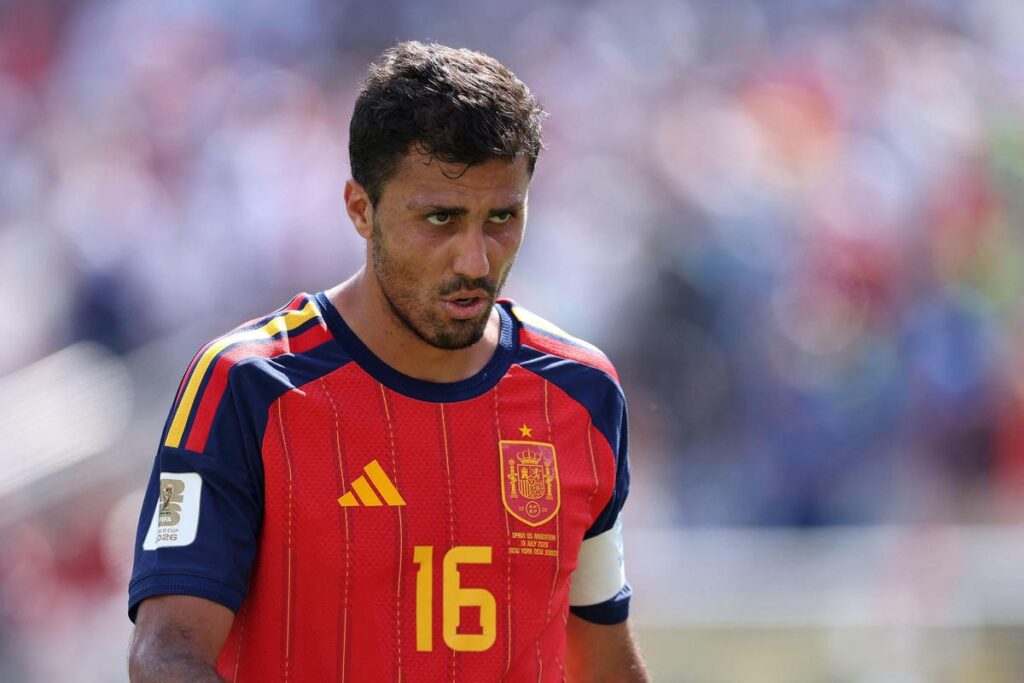
Consequently, the defending champions failed to register a single shot in regulation time.
Argentina relied on deep defending throughout the contest. They crowded their own penalty area and forced Spain into wide positions. However, that approach left Lionel Messi isolated for long periods.
Rodri dictated play in midfield and kept Spain on the front foot. Spain recovered possession within seconds whenever they lost it. That constant pressure slowly wore Argentina down.
Key Turning Points in the Spain vs Argentina Final
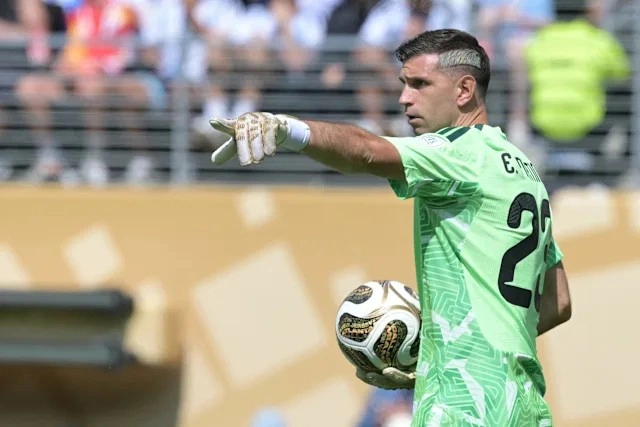
Emiliano Martínez kept Argentina’s hopes of winning the final alive with a remarkable performance.
The goalkeeper made a World Cup final record of 11 saves during regulation time. His brilliant stoppage-time save from Lamine Yamal forced the match into extra time. He broke the previous World Cup final record of 8 most saves set in 1994.
The contest changed in the 90+3′ minute. Enzo Fernández received a second yellow card for a late challenge on Pau Cubarsí. Argentina entered extra time with ten players and focused only on defending.
Spain finally found the breakthrough in the 106th minute, just after the restart of extra time. The decisive move unfolded in three quick phases that ultimately settled the World Cup final.
Pedro Porro delivered a sweeping right-footed cross into the penalty area before Nico Williams brilliantly headed the ball back across the face of goal.
Ferran Torres reacted instantly, firing past Emiliano Martínez from close range to seal Spain’s historic victory.
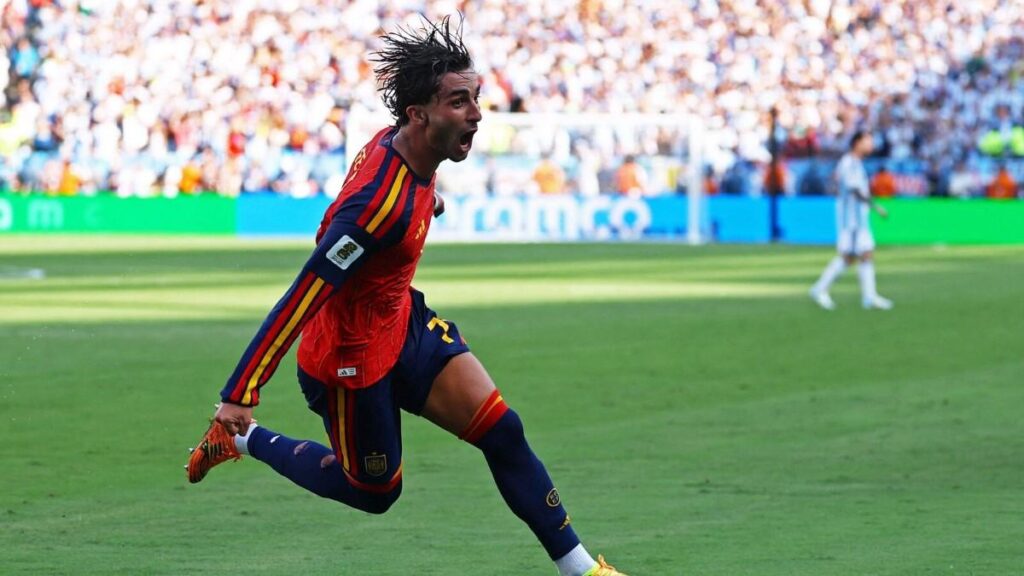
The decisive strike sparked wild celebrations among the Spanish players and supporters as they secured their second FIFA World Cup title.
FIFA World Cup 2026 Individual Award Winners
Several stars received individual honours after the FIFA World Cup 2026 Final. Spain collected four major awards following another outstanding tournament.
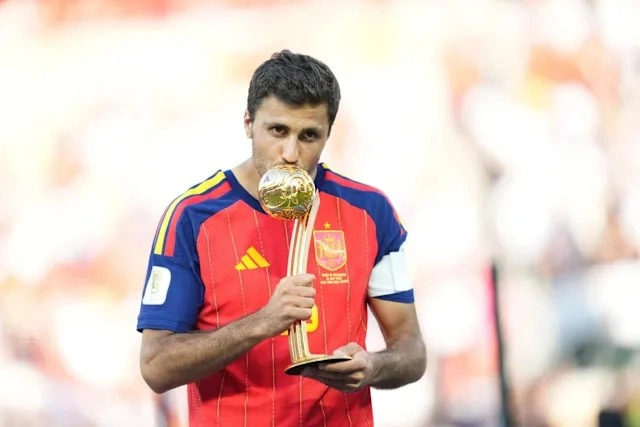
The awards received by the stars are as follows:
| Award | Winner |
|---|---|
| adidas Golden Ball | Rodri (Spain) [seven clean sheets in eight matches- 1 Goal Conceded] |
| adidas Silver Ball | Lionel Messi (Argentina) |
| adidas Bronze Ball | Kylian Mbappé (France) |
| adidas Golden Boot | Kylian Mbappé (France) – 10 Goals |
| adidas Silver Boot | Lionel Messi (Argentina) – 8 Goals |
| adidas Bronze Boot | Jude Bellingham (England) – 7 Goals |
| adidas Golden Glove | Unai Simón (Spain) |
| FIFA Best Young Player Award [presented by Aramco] | Pau Cubarsí (Spain) |
| FIFA Fair Play Trophy [presented by McDonald’s] | Netherlands |
Spain Receive Record FIFA World Cup Prize Money
Spain’s FIFA World Cup triumph also brought a record financial reward. The new world champions received $51 million (approximately ₹492.16 crore) from FIFA after winning the expanded 48-team tournament.
Argentina also walked away with a significant payout despite finishing runners-up. Lionel Scaloni’s side earned $34 million (approximately ₹327.95 crore) after reaching the final.
Spain’s celebrations included another historic first. They became the first FIFA World Cup champions to receive official FIFA World Cup Winners’ Rings, making their title-winning night even more memorable.
Historical Impact of the Spain vs Argentina Final
Spain lifted their second FIFA World Cup trophy, 16 years after winning their first title in South Africa. They also became the reigning UEFA European and FIFA World Cup champions at the same time.
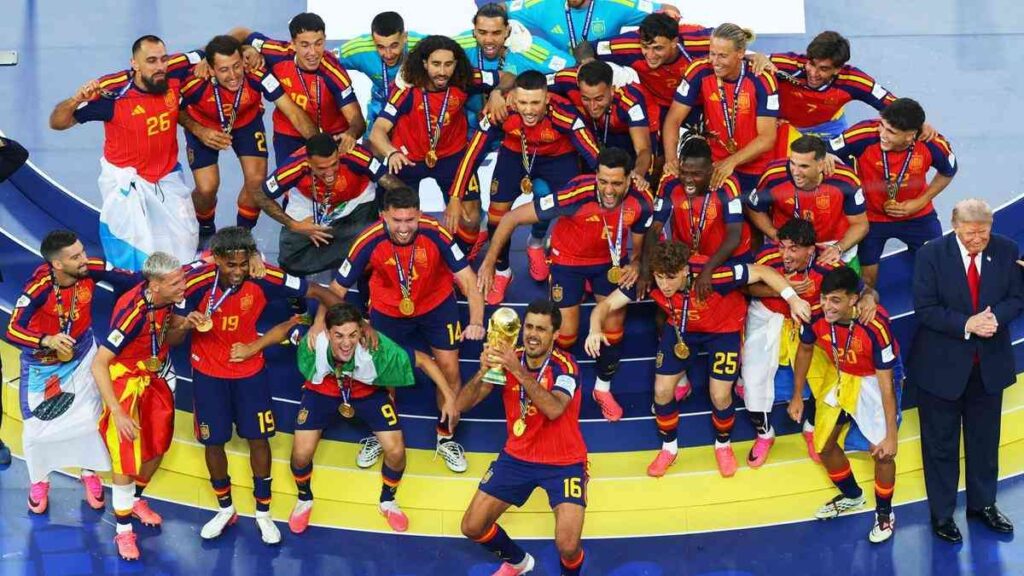
Luis de la Fuente’s side produced one of the greatest defensive campaigns in tournament history. Spain conceded just one goal throughout their World Cup-winning run while dominating every knockout match.
Argentina’s title defence ended after another impressive tournament. Lionel Messi reached a second straight World Cup final, but Spain’s disciplined display denied the Albiceleste a successful defence of their crown.
Spain vs Argentina Final Match Statistics
Spain dominated almost every key statistic in the final. Argentina spent long periods without the ball and struggled to create meaningful chances.
Have a look at the key statistics of the final match:
| Statistic | Spain | Argentina |
|---|---|---|
| Shots | 20 | 3 |
| Shots on Target | 11 | 0 |
| Possession | 68% | 32% |
| Passes | 803 | 445 |
| Pass Accuracy | 90% | 78% |
| Fouls | 21 | 24 |
| Yellow Cards | 0 | 5 |
| Red Cards | 0 | 1 |
| Offsides | 4 | 1 |
| Corners | 9 | 4 |
The statistics reflect Spain’s complete control of the contest. They created more chances, completed almost twice as many passes, and finished with 68% possession.
Argentina managed only three shots and failed to hit the target once. Spain’s relentless pressure never allowed the defending champions to find their rhythm.
Read This Next:
Conclusion
The Spain vs Argentina Final will be remembered for much more than its single goal. Spain controlled the match, stayed patient under pressure, and finally found the breakthrough in extra time to secure a deserved victory.
The triumph earned Spain its second FIFA World Cup title and completed one of the tournament’s finest campaigns. Luis de la Fuente’s side combined defensive discipline with attacking quality to finish as worthy world champions.
The FIFA World Cup 2026 journey now ends. Over 39 unforgettable days, the tournament treated football fans to nonstop drama, thrilling contests, and unforgettable moments.
Every nation added its own chapter to football’s biggest spectacle, making each round more exciting than the last.
Spain eventually stood at the final, but the tournament as a whole celebrated the passion, unity, and enduring magic that make the FIFA World Cup the greatest stage in football.
